What influences the cost of publishing in a journal (APC)?

Publishing in a peer-reviewed scientific journal is an essential milestone for researchers seeking to share their findings, build academic reputation, and advance their careers. However, one aspect that often raises questions is the cost associated with publication — the Article Processing Charge (APC). Many researchers wonder: Why do APCs differ so much from one journal to another? This article breaks down the key elements that contribute to the final cost of publishing in a scientific journal.
How is the cost of publication determined?
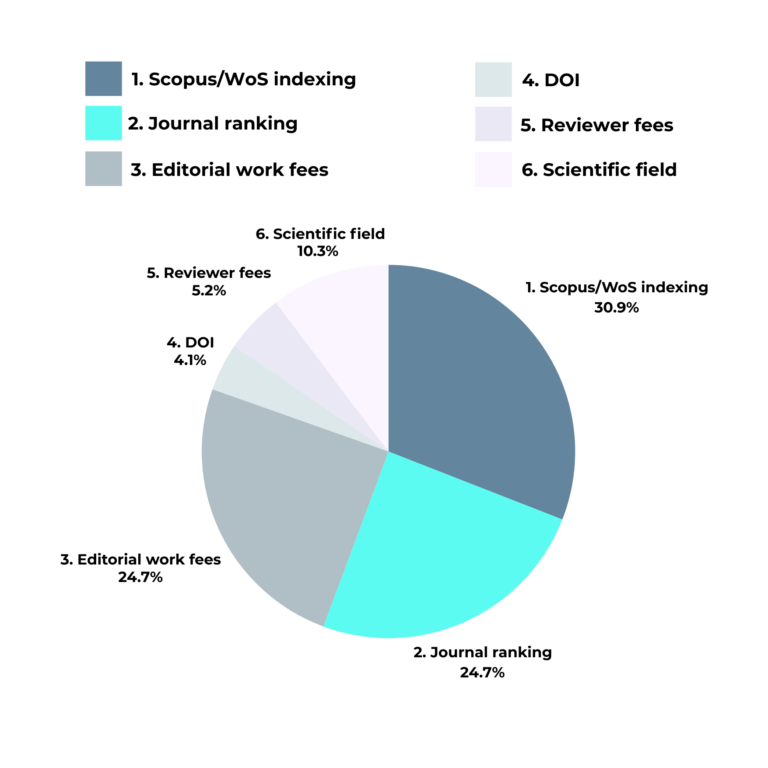
1. Journal Indexing
One of the most influential factors is whether the journal is indexed in globally recognized databases such as Scopus or Web of Science. Indexed journals typically charge higher APCs due to their reputation, stringent editorial standards, and wider dissemination of published work. Authors benefit from increased visibility and citation potential, but they also pay a premium for this level of credibility.
2. Journal Ranking
The journal’s impact factor or CiteScore significantly affects the APC. High-ranking journals, particularly those in the Q1 or Q2 quartiles, often receive more submissions and can afford to be selective. The prestige of being published in such a journal can greatly enhance a researcher’s academic profile, and the APC reflects this added value.
3. Scientific Discipline
Publication costs can vary depending on the field of study. Journals in medicine, biology, and engineering tend to have higher APCs due to complex review processes and the need for technical editing. These disciplines often require more resources to ensure content quality and compliance with rigorous standards.
4. Peer Review Model
Some journals pay reviewers to accelerate the peer review process. Publishers such as MDPI and Frontiers are known for offering paid, fast-track review services, which in turn increase the overall cost of publication. This policy supports quicker turnaround times but adds to the author’s financial responsibility.
5. Editorial and Production Services
Regardless of the journal, every APC includes a set of core services:
Assignment of a DOI (Digital Object Identifier),
Typesetting and formatting the manuscript to meet publication standards,
Platform integration — uploading and presenting the article on the journal’s website,
Compensation for editorial and technical staff,
Issuance of an official acceptance letter or certificate.
These services ensure that the article is professionally processed and made accessible to the scientific community.
Final Thoughts: Choosing the Right Journal
Understanding what goes into the APC helps authors make informed decisions. It’s not just about choosing the cheapest option — it’s about balancing budget, visibility, speed, and prestige. Authors are encouraged to:
Carefully review journal indexing and ranking,
Consider the policies around peer review,
Evaluate included editorial services,
Submit well-prepared manuscripts to avoid additional revision costs.
Сall for papers
The journal accepts scientific articles in various fields within the social sciences, including research that addresses contemporary and emerging global challenges.
Scope – Social Sciences;
Indexed: Google Scholar, Crossref, Sherpa Romeo;
First decision – 5 days;
Available online after article acceptance: Within 10 days;
APC: 95 USD.