Instructions for Scimago: What It Is and How to Use It

Introduction
Scimago Journal & Country Rank is a free analytical tool that allows you to check a journal’s quartile in Scopus.
The service automatically calculates the SJR indicator and assigns the journal to a specific quartile (Q1–Q4), so you don’t have to calculate percentiles manually.
Scimago updates its data once a year—usually in April or May.
This has been confirmed by the Scimago Journal & Country Rank (SJR) developers and is observed annually:
▪️ During this period, SJR indicators are updated for the previous calendar year.
▪️ New journals included in Scopus during the year are added.
▪️ Quartile indicators (Q1–Q4) are recalculated for all journals.
Example:
In May 2024, data for 2023 was published.
This means that if it is now May 2025 — we are working with the 2024 data.
Throughout the year after the update, Scimago shows the same quartile data until the next update.
⚠️ Important:
Since Scimago quartiles are updated only once a year, the data may become outdated. For example:
▪️ In Scimago, a journal is still shown as Q4 (based on 2023 data).
▪️ But in Scopus, according to CiteScore, it is already Q2 (based on 2024 data).
Risk: you might underestimate a quality journal or, conversely, choose a weak one because of outdated information.
How to Use Scimago — Step-by-Step Guide
Step 1. Go to the website
Visit the official system at:
👉 https://www.scimagojr.com
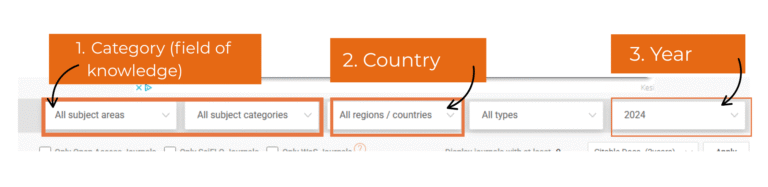
Step 2. Select the Journal Rankings tab

Step 3. Sort journals by:
Category (field of knowledge);
Country;
Year;
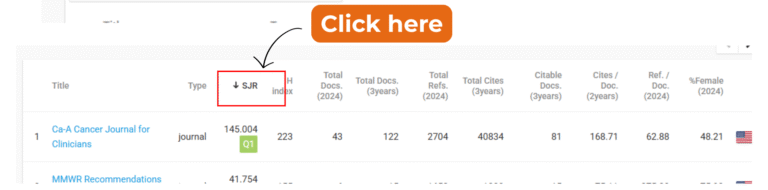
4. Quartile (Q1–Q4) or SJR value — by clicking the column header, you can sort from Q1 to Q4 and vice versa.
You can also view country-based journal statistics
– a useful analytical tool.
Country Statistics
Step 1. Open the Country Rankings tab.

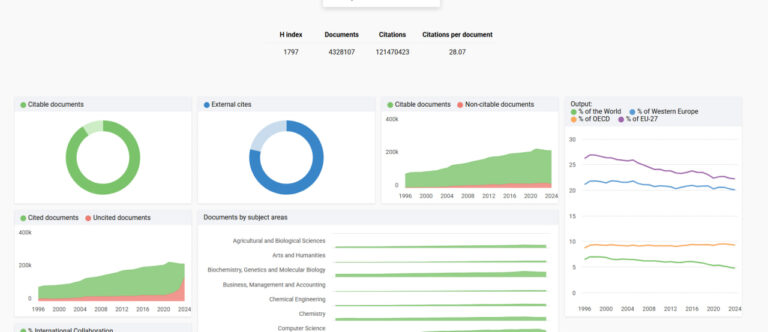
Step 2. For example, select Germany from 1996 to 2024.
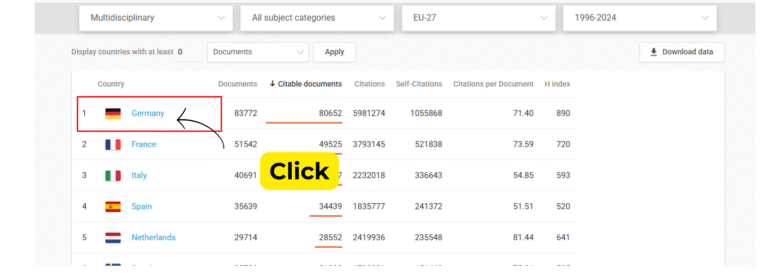
As shown in the screenshot, you can see the full country statistics for H-index, number of documents, number of citations, and citations per document.
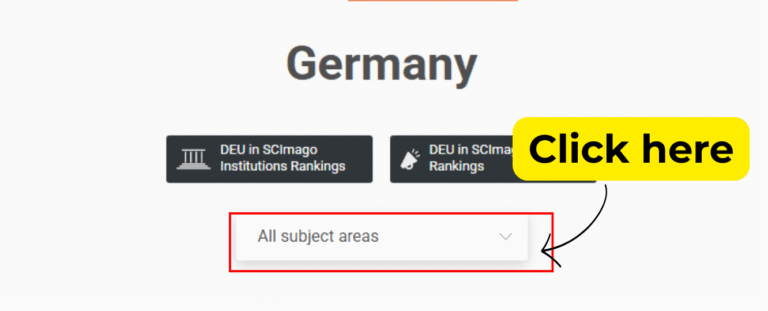
Step 3. You can also filter by discipline and view complete country statistics by subject area.
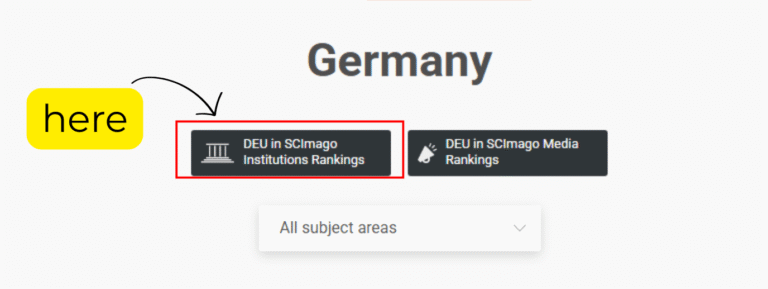
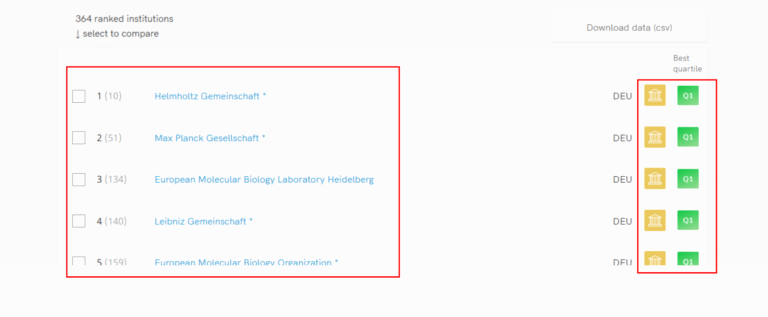
Step 4. By clicking on DEU in Scimago Institutions Rankings:
Here you will find all the journals of the country with the indicated quartile, subject icon and title:
Next Step — Journal Card
For example, let’s choose Nature Reviews Clinical Oncology.
There you will find detailed information:
The subject areas where it is indexed;
Country;
Quartile;
Publisher;
ISSN;
Coverage years;
Publisher’s website.
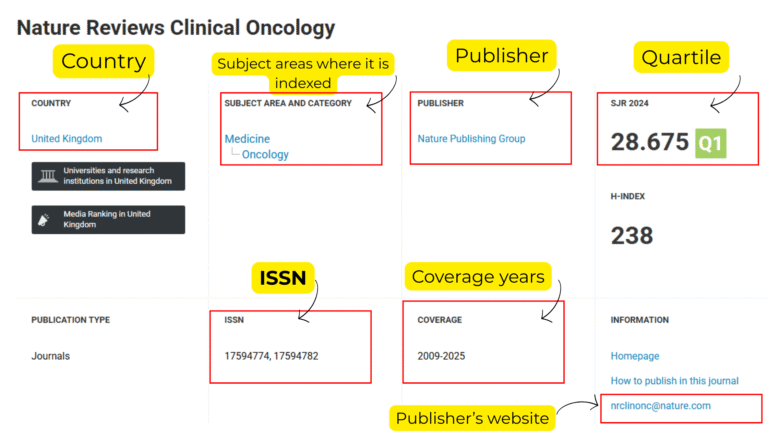
💡 Note: If there is no link to the publisher’s website, the journal should be double-checked!
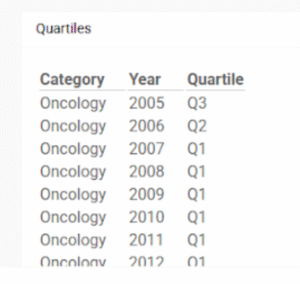
- You can also see a chart of SJR changes over the years.
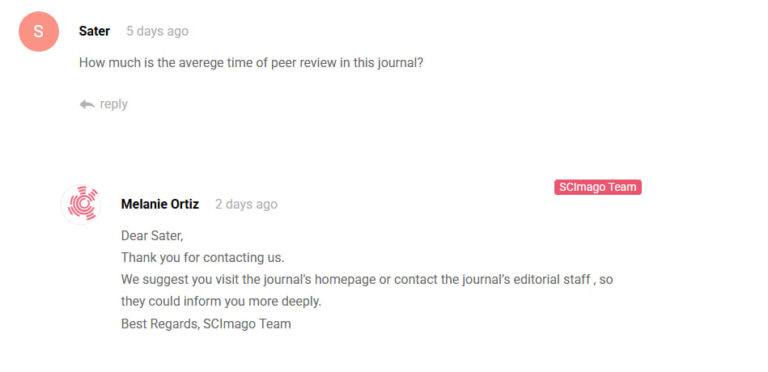
- The most useful feature — user comments!
At the bottom of the journal’s page, there is a section with feedback.
Very often, users warn if the journal is low-quality, has indexing issues, or is suspected of fraudulent practices.
Conclusion
Scimago is a convenient and visual tool for quickly checking journals indexed in Scopus. Its main advantages: automatic quartile determination (Q1–Q4) and open access to data with filters by countries, disciplines, and metrics.
However, it is crucial to understand its limitations:
Scimago updates data only once a year (April/May), reflecting the status of the previous calendar year.
Throughout the year, the information remains unchanged.
This means quartile data may be outdated, especially if a journal has recently improved or lost its ranking in Scopus.
In countries where percentile or up-to-date CiteScore is required for academic attestation, relying solely on Scimago is risky.
You may misjudge a journal — losing time, money, or even recognition of your publication when defending your dissertation.
Use Scimago as a starting point for analysis:
To search for journals by discipline;
To check general metrics;
To assess performance trends over previous years;
To filter out suspicious journals without websites or with negative reviews.
But make your final decision based on current Scopus indicators — CiteScore, percentile, and indexing date.
⚠️ Don’t rely only on outdated Scimago data.
To choose a reliable journal, you need to check the latest Scopus indicators — CiteScore, percentile, and indexing status.
👉 That’s why Futurity Publishing offers the service Scopus & Journal Selection & Submission Support.
With us, you get:
✅ Careful journal verification (indexing, percentile, country, publisher)
✅ Selection of a trusted journal that matches your topic and deadlines
✅ Full guidance from submission to indexing
✅ Official contract and transparent guarantees
📩 Contact Futurity Publishing today — and we’ll match your article with a reliable Scopus journal.